The Western Cape was occupied by Stone Age and Paleolithic man from one million years ago, living in caves and under overhangs, and hunting a rich variety of wildlife. Various glacial periods interrupted this occupation.
San hunter-gatherers lived in this area from about 10,000 years ago, until they were displaced by Khoikhoi (or Khoi) herders from the interior. The Khoi were originally part of a pastoral culture and language group found across southern Africa. Originating from the northern area of modern Botswana, this ethnic group steadily migrated south, reaching the Cape approximately 2,000 years ago.
The religious mythology of the Khoi gives special significance to the moon, which may have been viewed as the physical manifestation of a supreme being. Some other significant role players in their belief system can still be seen (although not open to the public) in the mountains at ‘Leipzig’, a farm that once, just like Penhill Manor, Toontjiesrivier, comprised the original farm of Cloppersbosch-Gelegen-aan-het-Revier-de-Sneuy.
The Khoi initially came into contact with Portuguese explorers in approximately AD 1500, with these ongoing encounters often turning violent. In addition, the local population dropped when the Khoi were inadvertently exposed to smallpox by Europeans.
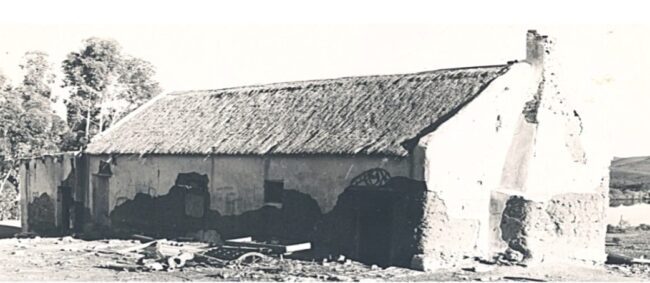
The valley is home to Penhill Farm, which has a history spanning 300 years, including being a staging post on the wagon route and an outpost of the Dutch East Indies Company.
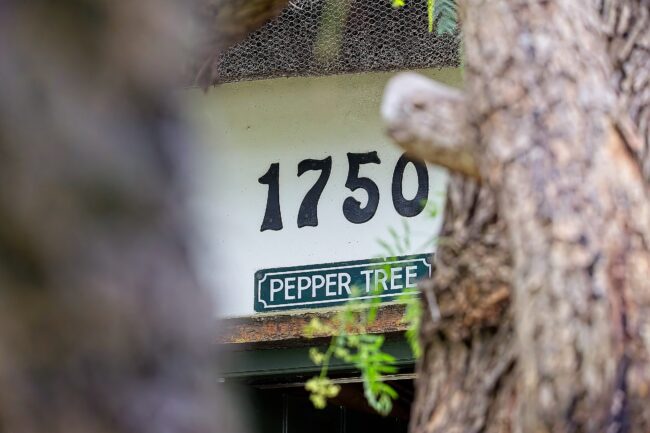
Penhill Farm’s original homestead, dating back to 1750, is a well-preserved example of Cape Dutch architecture.
Early History
The valley is situated along the original wagon route to Swellendam, making it an important historical stop for travelers.
At one point, a portion of the valley was part of the famous Vergelegen estate, built by the Governor of the Cape, Willem Adriaan van der Stel.